



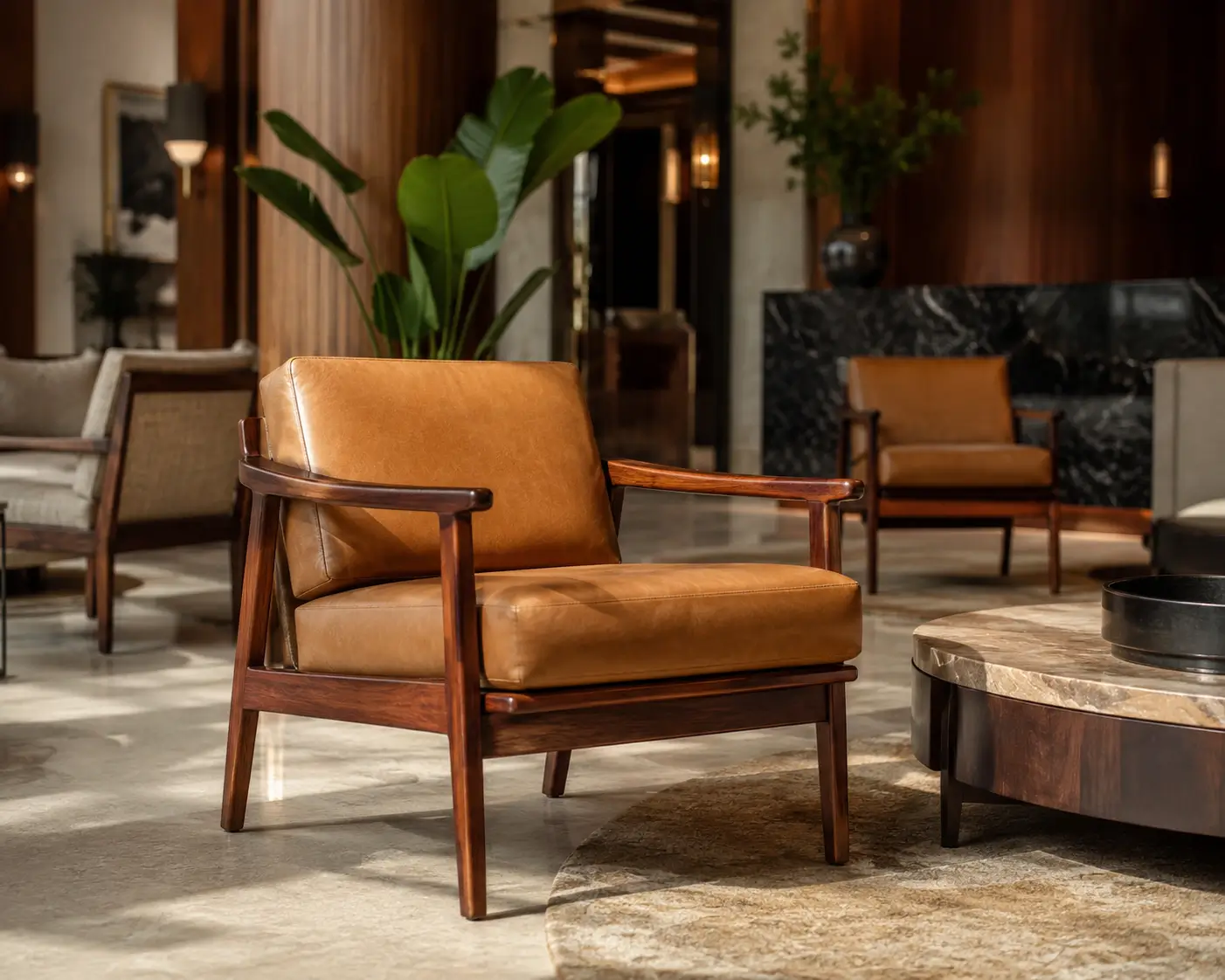
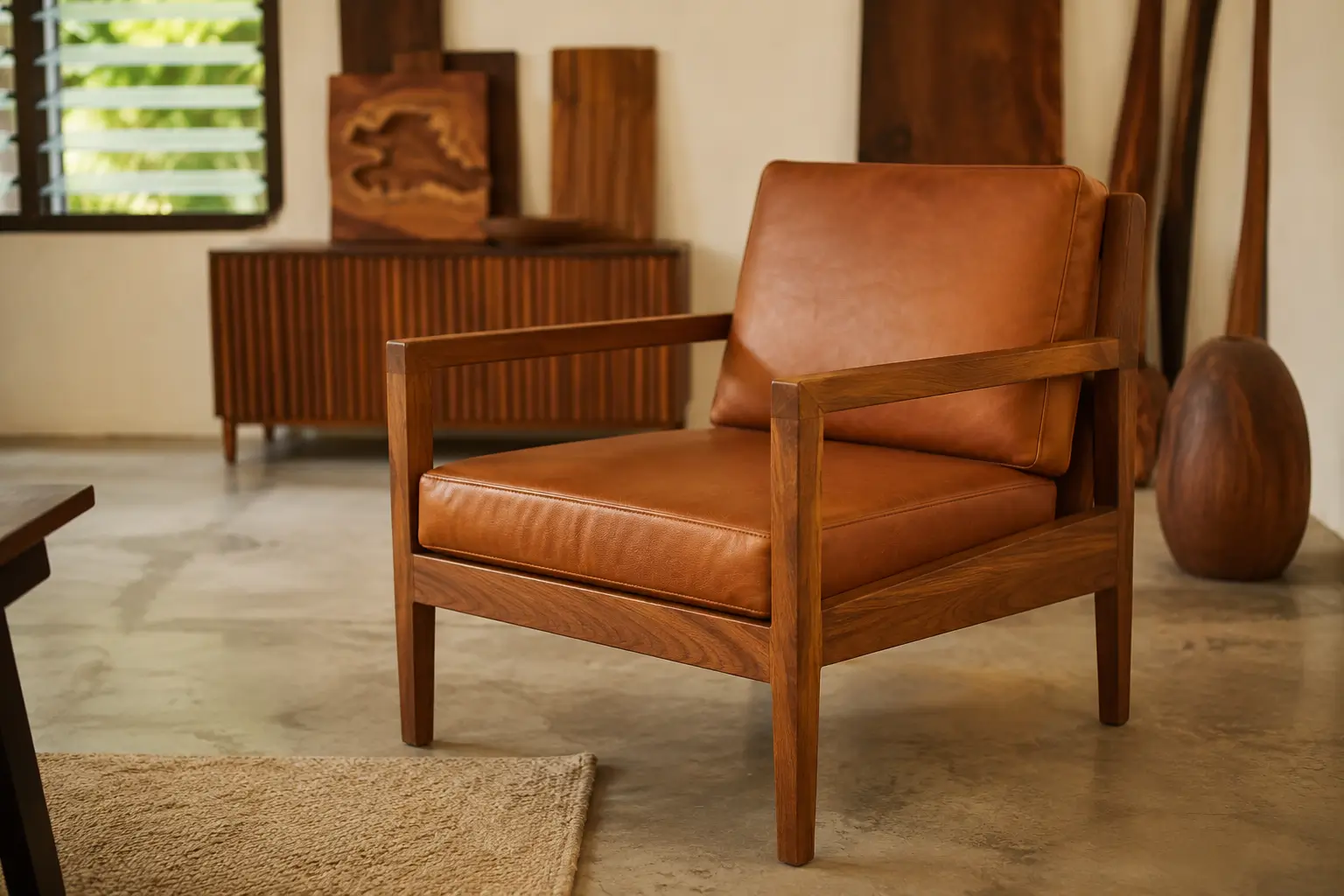

Every furniture workshop has a budget.
Furniture-making wood has a budget. Foam and upholstery fabric have a budget. Machine maintenance has a budget. Finishing materials, hardware, and logistics all have a budget. Even the varnish room has a line item.
Yet the furniture manufacturing skills gap rarely shows up anywhere in that spreadsheet.
There is no account code for it. No line under capital expenditure or operating costs. It does not arrive as a single invoice. Instead, it quietly spreads across the shop floor until nobody can say exactly how much it has cost the business.
It is the cost of turning an unprepared pair of hands into a skilled furniture maker.
The Hidden Cost of the Furniture Manufacturing Skills Gap
Most workshops never see this cost as one number, because it never lands as one bill. It arrives in fragments. A master joiner stops mid-project to correct a badly cut mortise. A length of premium hardwood is ruined because a measurement was read wrong. An upholstery frame is damaged because a new hand didn’t know how to handle the clamp. A delivery date slips because someone is still learning how to read a cutting list. Your most experienced craftsman slows his own bench work to show a recruit what a well-trained apprentice should already know. Then, just as that recruit becomes useful, he leaves for a workshop down the road offering better pay.
Each of these costs looks small on its own. Together, across a year, they can quietly become one of the largest unplanned investments a furniture manufacturer makes.
When people in furniture manufacturing talk about the skills gap, the conversation usually turns to trade schools, vocational policy, or the shortage of young people entering the craft. All of that is true. But there’s a second reality that deserves just as much attention.
The furniture manufacturing skills gap is already a line item in your costs; it’s just unlabelled.
Every time a workshop takes on someone who cannot yet cut a clean joint, upholster a frame correctly, or finish a surface to standard, the business quietly takes on the job of finishing that person’s training. The workshop becomes a classroom. Master craftsmen become instructors. Supervisors become teachers. And the client — the interior designer, the hospitality buyer, the homeowner expecting a flawless bespoke piece — unknowingly becomes part of that learning curve, absorbing the consequences of avoidable mistakes in the piece they receive.
This has become so normal in furniture manufacturing that many workshops no longer question it.
They should.
Furniture making, especially at a luxury or bespoke level, is a discipline built on precision, tight joinery, true right angles, even stitching, and a flawless hand-rubbed finish. Every hour spent correcting an avoidable error is an hour not spent producing. Every ruined piece of timber or fabric is money that cannot be recovered. Every slipped delivery date affects client trust and the next order. These aren’t isolated shop-floor headaches. They are the direct financial cost of putting untrained hands on complex, high-value pieces before they are ready.
There’s a real irony here. Many furniture manufacturers spend real energy negotiating a better rate on timber or fittings, while a much higher cost bleeds quietly from their own factory floor. A modest saving on materials might protect a few hundred thousand naira over several months. Meanwhile, inefficient onboarding, repeated mistakes, spoilt materials, and high turnover among skilled hands can consume millions across that same period, and nobody notices, because the loss is scattered across payroll, materials, quality control, and recruitment rather than sitting in one place.
Since no single department owns the problem, no single department is measuring what it actually costs.
Perhaps the most expensive part of the furniture manufacturing skills gap is time.
Damaged timber can be replaced. A ruined finish can be redone. Money, eventually, can be recovered.
Lost production time in a furniture workshop cannot.
When a senior craftsman interrupts his own bench time to teach basic joinery, output for that day drops. When a production line slows because new hands are still learning to handle a spray finish or upholster a seat correctly, delivery commitments slip. When a piece has to be remade because of a quality failure, both the time and the materials are gone for good. Unlike a machine, time on the shop floor cannot be serviced back into existence.
There’s a subtler cost too, one that rarely shows up in any report but touches every furniture manufacturer eventually.
A workshop that constantly brings in underprepared hands slowly develops a culture where correcting mistakes becomes routine. Supervisors start to expect rough joinery from new recruits. New hands assume a shaky first few months on the bench is simply how things work. Preventable errors start to feel normal, because everyone has quietly agreed that real learning happens after someone is already on the payroll.
Over time, this makes real craft excellence harder to sustain; the workshop spends more energy fixing avoidable mistakes than raising its standard of work.
Which raises an uncomfortable but useful question for any furniture manufacturer.
What if the wrong cost has been the one everyone’s been measuring?
Instead of asking whether investing in properly trained craftsmen is expensive, the more useful question is: how much does it already cost to bring in people who aren’t ready for the bench?
Seen this way, investing in craft training stops looking like a nice-to-have and starts looking like a straightforward financial decision.
The question shifts from “How much does training cost?” to “How much does an unprepared hire already cost us?”
Those are two very different questions, and they tend to lead to two very different decisions.
The furniture manufacturers building genuinely enduring brands increasingly treat skilled craft talent as something they cultivate deliberately, not something they simply hire and hope for. Rather than absorbing the hidden cost of incomplete training on every project, they invest earlier — building relationships with trade schools, running structured apprenticeships, or partnering with institutions that teach real joinery, upholstery, and finishing skills before someone ever picks up a chisel on a client’s commission.
This doesn’t remove the need for training altogether. Every workshop will always need to introduce new hands to its own standards, its own finishes, its own way of building a piece that will be kept for a generation, not replaced in five years. What changes is the starting point. Instead of teaching someone how to read a technical drawing, hold a chisel correctly, or understand how a joint carries load, the workshop is building on a foundation that’s already there.
That’s a meaningful difference.
One craftsman arrives needing an education.
The other arrives needing an orientation to the house style.
Those are not the same thing, and they don’t cost the same thing either.
As furniture manufacturers navigate rising material costs, more competition, and clients who know exactly what quality should look like, attention naturally gravitates toward machinery, finishes, and sourcing. All of that matters. But none of it delivers a truly well-made piece without hands that know how to use it properly.
Perhaps the next real opportunity to protect margins in furniture manufacturing isn’t found in a cheaper timber supplier or a better fitting price. Perhaps it starts with naming a cost that has quietly existed on every shop floor for years.
The most expensive line item in many furniture workshops is never written into the budget.
It is the cost of teaching a craftsman what he should have already known before he picked up his first chisel on a paying commission.
The furniture manufacturers who recognise this first won’t just protect their margins. They’ll build stronger benches, produce work that holds up to real scrutiny, keep skilled hands longer, and create a standard of craft that becomes genuinely difficult for competitors to copy.
This is the thinking behind everything we build at Majeurs. Every piece that leaves our workshop is made by hands we have invested in training properly, which is exactly why we started the Majeurs Furniture Academy, our six-month programme producing disciplined, production-ready furniture makers instead of hoping the shop floor teaches them on the job.
You can see that same investment in skill and material honesty in our Atúnlò Collection: pieces engineered from high-density off-cuts by artisans trained to see structural potential where others see waste. Follow the process behind each piece on Instagram @majeursholdings.
