



FF&E Sourcing from Africa: A Specifier’s Guide to Working with Majeurs, a Lagos Furniture House
If you are a specifier, FF&E consultant or procurement lead putting together a project brief, you have probably typed some version of this into a search bar: FF&E furniture supplier West Africa. It is not a casual search. It is the language of someone who already knows what FF&E means (furniture, fixtures and equipment) and now needs to know whether a studio in Lagos can deliver on a commercial timeline.
The short answer is yes. The longer answer is what this guide is for.
Why specifiers are looking to Africa for FF&E right now
The global hotel FF&E market was valued at roughly $61.7 billion in 2025 and is projected to reach $98.3 billion by 2033, growing at just over 6% a year, driven largely by new hotel construction and renovation cycles in established markets. Direct sourcing from manufacturers, rather than through layers of distributors, still accounts for the largest share of procurement, because it is the only way project teams can customise designs, negotiate pricing and control quality at the source.
Rising demand and a preference for direct manufacturer relationships are exactly why West Africa is entering more FF&E conversations. Lagos offers what procurement teams are looking for: design-led, editorially credible product and direct access to the workshops making it, without the markup or lead-time uncertainty of a multi-country supply chain.
What a West African FF&E partner should be able to do
When specifiers search for an FF&E furniture supplier in West Africa, they are usually looking for a partner who can:
- Work from a specification sheet or client brief, not just a catalogue
- Quote and deliver at the volume a hospitality or residential project requires
- Meet contract furniture standards: the commercial-grade durability hotels and serviced residences need, not retail-grade pieces
- Provide the documentation a procurement file needs, from lead times and materials to freight terms
A furniture house working at this level is different from a general exporter. It reads a brief the way a specifier writes it, then builds to it.
The materials question: what “handcrafted in Africa” means on a spec sheet
One of the most common questions from international designers is simple: what is this furniture actually made of? West Africa’s furniture tradition is built on some of the most sought-after hardwoods in the world, and knowing the vocabulary makes a spec sheet much easier to read with confidence.
Hardwoods commonly specified
- Iroko (Milicia excelsa), sometimes called African teak: dense, naturally durable and prized for its golden-to-brown tone, often used as a teak alternative indoors and out
- Sapele, a close relative of true mahogany with a rich reddish-brown grain that deepens with age, named after the Nigerian timber town it is associated with
- African mahogany, the warm, fine-grained wood most associated with heritage case goods and dining furniture
- Afzelia (Doussié), dense and termite-resistant, taking a high polish, often specified for statement tables and structural components
- Opepe (Bilinga), valued for strength and stability in larger case pieces and outdoor-adjacent furniture
Upholstery and finishes commonly specified
- Full-grain and top-grain leathers, often vegetable-tanned
- Bouclé, linen and mohair blends for upholstered seating
- Handwoven West African textiles, including Aso-oke, as accent upholstery or cushioning
- Natural cane and rattan webbing for backs and seats
- Brass, bronze and hand-finished hardware for legs, handles and structural details
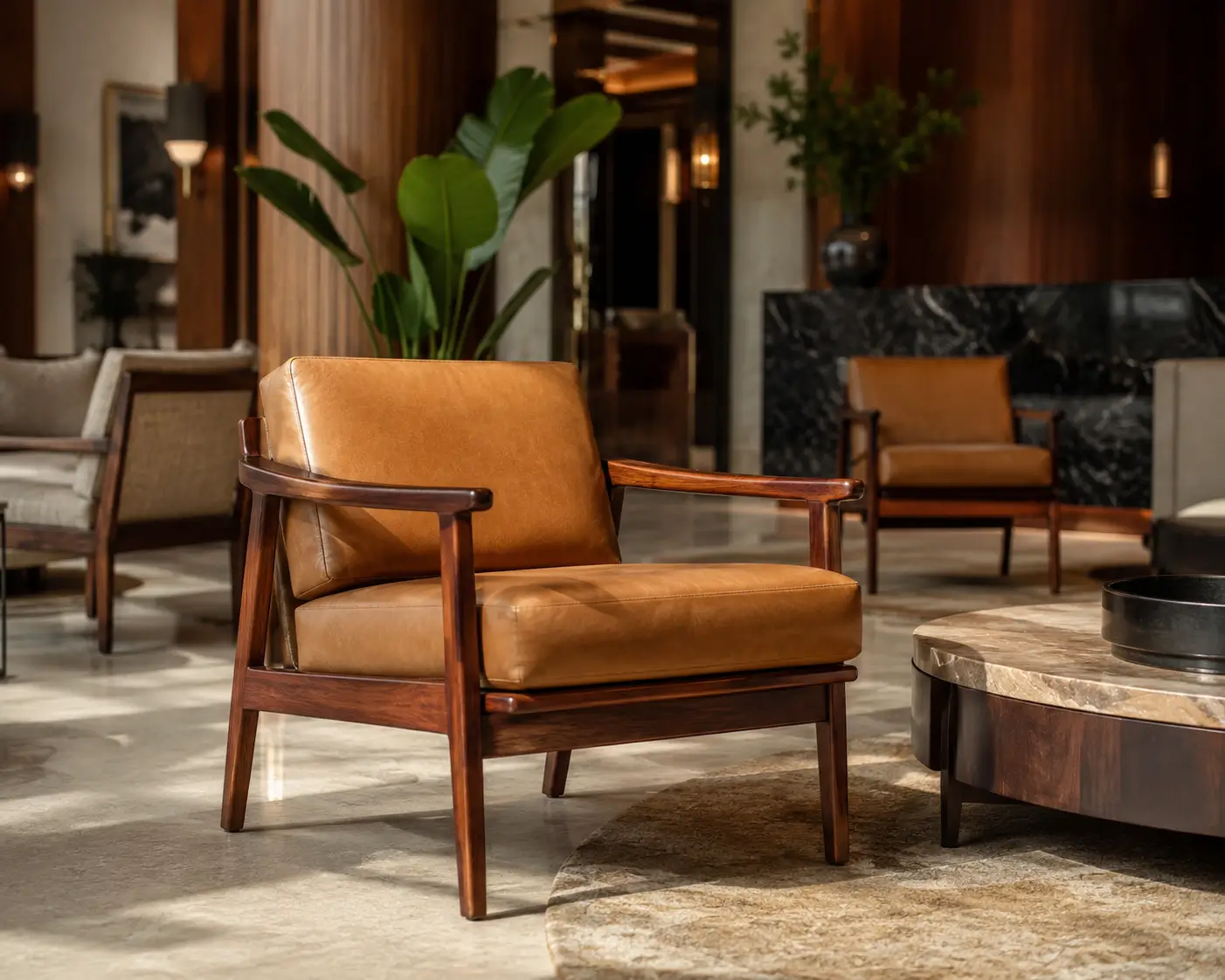
Specifying by material, such as a “Sapele dining table” or an “Iroko-framed lounge chair”, gives an FF&E consultant something concrete for the bill of quantities, and it is the language procurement teams already use.
Specifying for a live project? Trade members get priority sampling, 3D-ready models and a dedicated contact. See how the Trade Program works.
A working example: what this looks like on a real brief
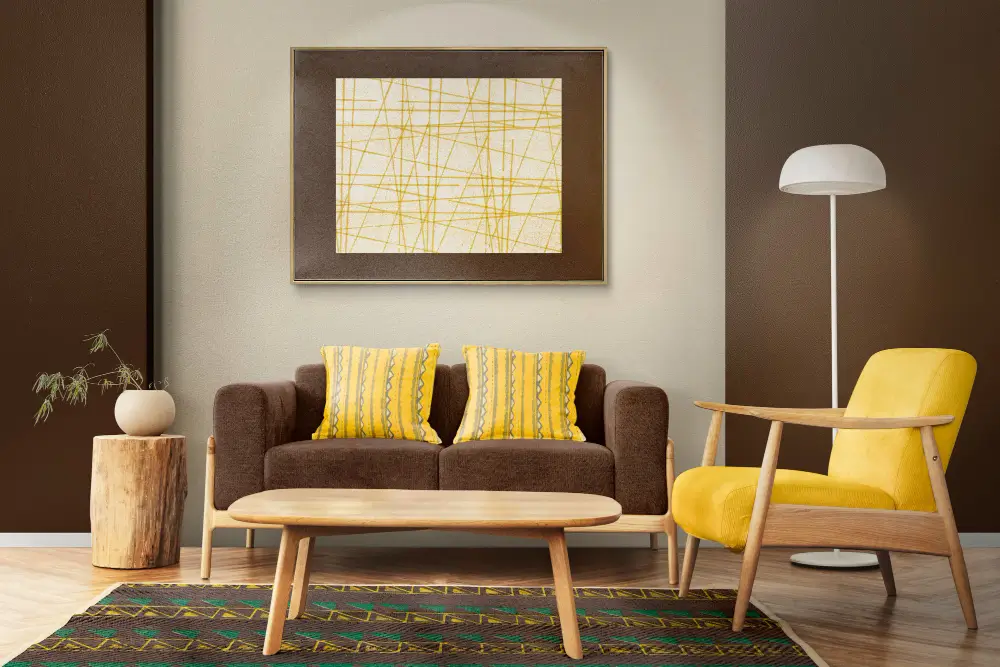
Take a boutique hotel of 60 to 80 keys being developed in Lagos or Port Harcourt, or fitted out for a hospitality group expanding into London or California. The brief calls for lobby seating, guest room case goods and outdoor lounge furniture, all built to commercial durability standards while carrying a distinct design identity.
Working from that brief, Majeurs would typically:
- Review the specification and confirm which pieces can come from existing collections and which need a bespoke commission
- Recommend materials, such as Sapele or Iroko for structural frames and leather or bouclé for upholstery, based on how hard each space will be used
- Provide a lead time and freight estimate for the confirmed quantities
- Deliver a sample or finish reference before full production begins
The process is the same whether the property is in Lagos or Los Angeles. International projects simply need freight and customs built in from the start, which is why an early conversation matters more than a late one.
What to ask before you open a trade account
If you are evaluating a contract furniture supplier in Nigeria, these questions will tell you most of what you need to know. Here is how Majeurs answers them:
- What is the lead time for a bespoke commission versus a collection piece? Lead times are confirmed per brief at quotation, and trade projects move ahead of first-time retail enquiries.
- Which materials are available? Three series cover most briefs: Essential (MDF, laminate, textured board), Signature (veneers, bouclé and velvet, soft-close hardware) and Bespoke (solid wood, marble, high-gloss lacquer, custom metalwork).
- Can you support a project BOQ? Yes, with a full material and finish library, 3D-ready models, samples and prototypes.
- How does your trade account work? Through the Majeurs Trade Program: no minimum to join, then tiered discounts of 5%, 12–15% or 15–20% based on cumulative annual spend.
- What warranty applies? 1 year structural on custom furniture, 6 months on upholstery and foam, 1 year on hinges and sliders and 3 months on surface wear.
Working with Majeurs
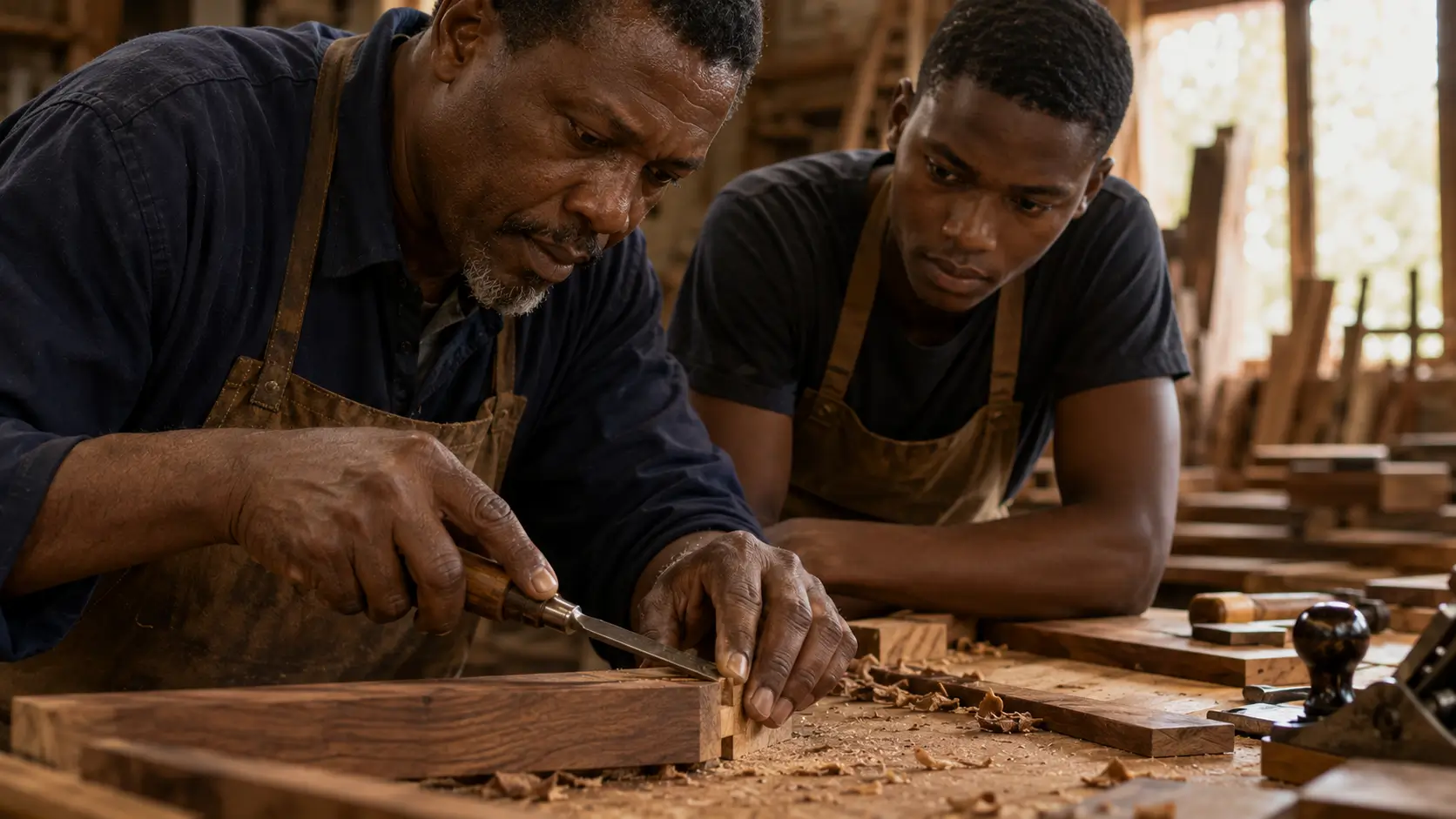
Majeurs is a Lagos-based furniture house building for both the discerning individual buyer and the specifier managing a multi-piece project. Pieces are built from West African hardwoods, including Iroko, Sapele, Afzelia and African mahogany, with hand-finished upholstery and detailing made for the demands of commercial and hospitality spaces.
For interior designers, FF&E consultants and procurement teams, the fastest way to start is a specification conversation, not a purchase order, and the Trade Program is built for exactly that.
THE MAJEURS TRADE PROGRAM
Bring West African craftsmanship into your next specification
Join the Majeurs Trade Program for trade discounts of up to 20%, priority sampling and a dedicated contact for every project.
